Creating a native experience for the Middle-Eastern market
Recharge.com
Services
- Stakeholder Management
- Inclusive Design
Role
Product Designer
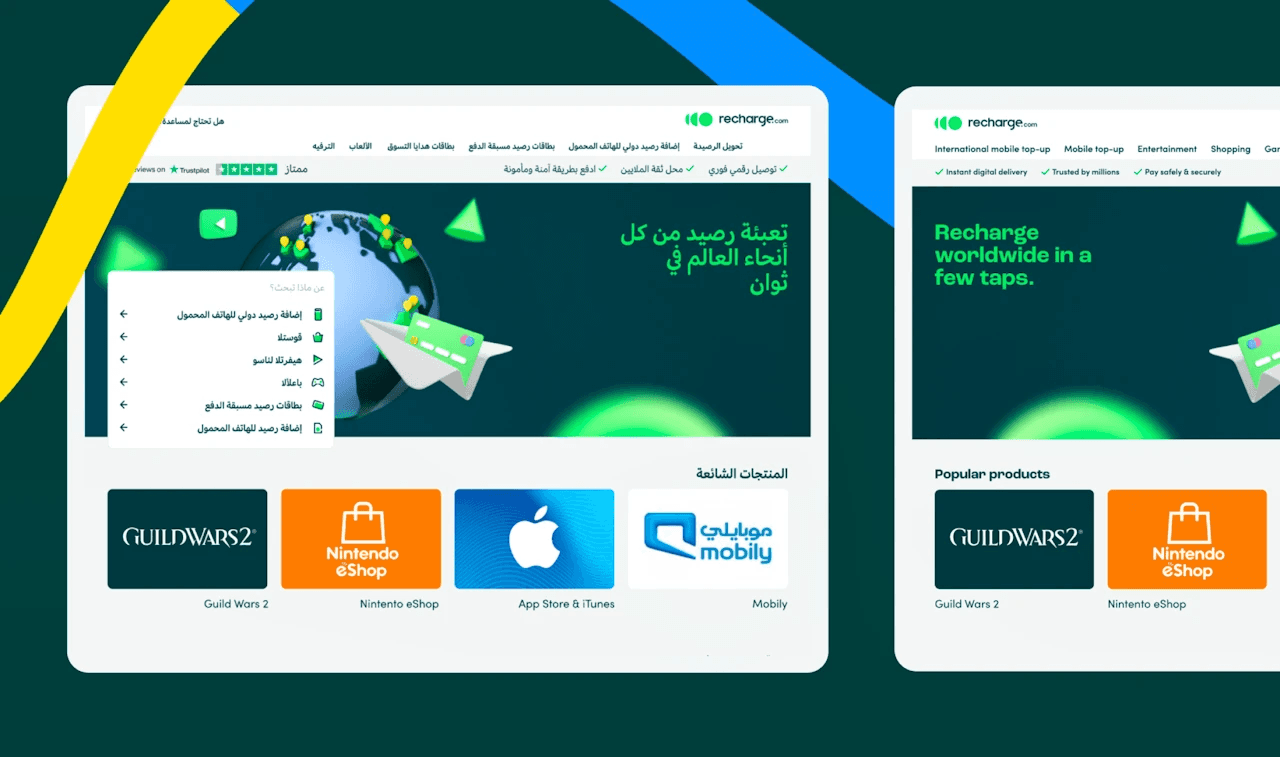
Recharge.com is a digital platform for purchasing and gifting digital credits such as gift cards, mobile credit, and game vouchers. To continue international growth and stay ahead of competitors, the company expanded into the Middle-Eastern market. This required more than translation. It needed an experience that felt native to local users.

Importance
A native experience in the Middle East means designing for right-to-left interfaces. Creating different reading and interaction patterns. Simply mirroring a Western interface is not enough to be experienced as a local provider.
Challenge
The key challenge was understanding the difference between visually flipping an interface and designing a truly native right-to-left experience. We needed to respect cultural and interaction norms while keeping the product recognisable and scalable along with the Western market updates.
Timeline and constraints
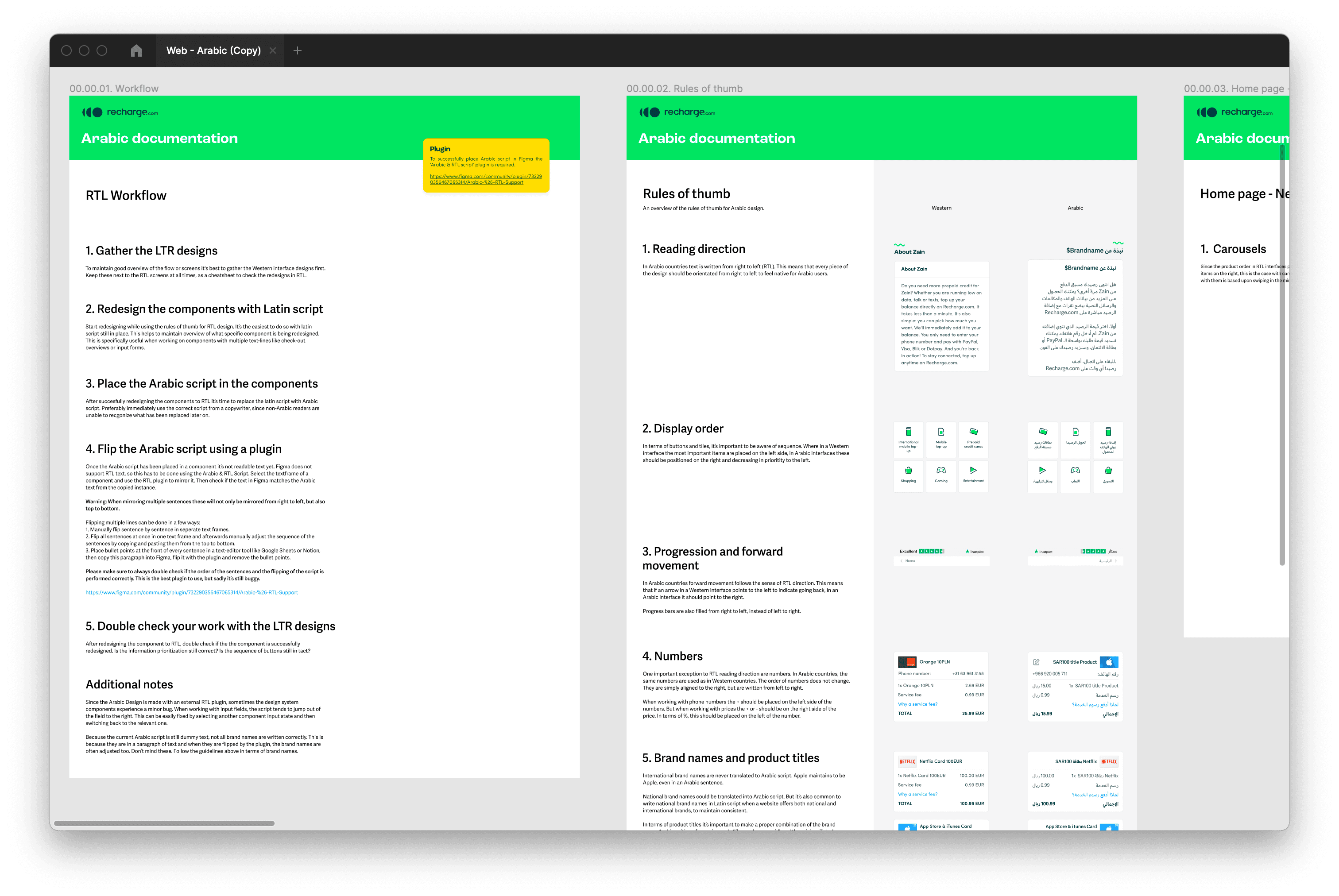
The project ran for eight weeks. Due to time constraints, design and development did not run side by side. This made clear documentation essential, both for handover to development and for enabling the internal design team to continue the work after the project ended.
My role
I took on a guiding role, acting as the main point of contact for the client and supporting the team to stay on schedule. I worked closely with a visual designer and a researcher, helping remove blockers and align decisions throughout the project.
Approach
We began by researching Middle-Eastern design patterns and right-to-left interaction principles. From there, I helped define the workflows and aligned with the team on that, ensuring shared understanding despite working in a script we could not read ourselves. Interaction and visual designs were created to feel native rather than mirrored. The designs were validated with native users through remote testing, which helped separate language quality issues from actual user experience concerns.
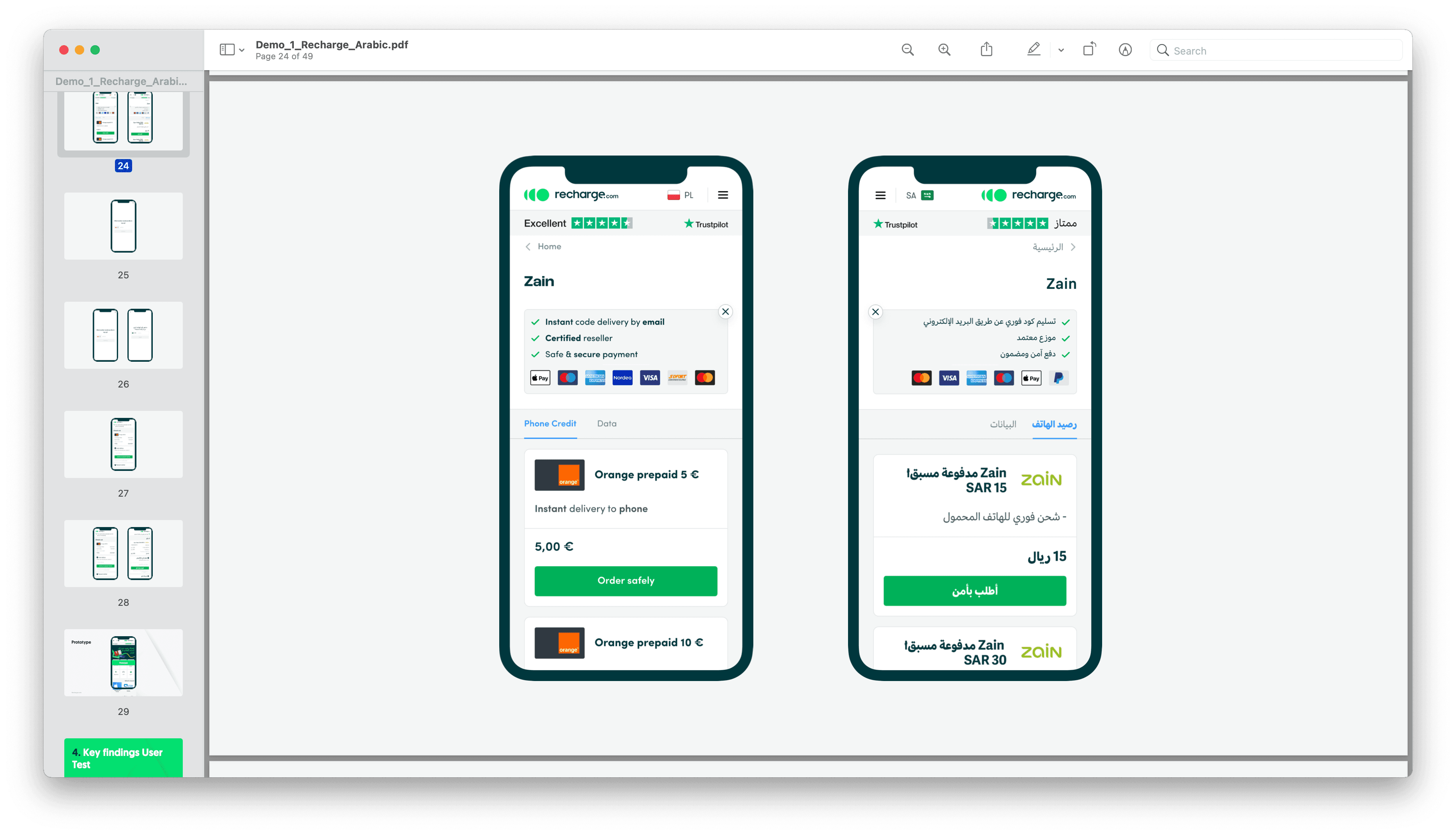
User testing showed that poor Arabic translations distracted users, even when the experience itself felt native. This insight helped focus feedback on what truly impacted usability rather than surface-level differences.
Outcome
The project delivered a native, validated website experience for a new market. The designs worked consistently across right-to-left and left-to-right scripts and were fully responsive. In addition, the team delivered a clear way of working and thorough documentation that enabled internal teams to build on the foundation.
Reflection
This project shows how I adapt my role to what a project needs. I combine hands-on design with coordination and guidance. Designing across languages and scripts requires structure, humility, and clear documentation to create work that lasts beyond a single release.
This project is part of work as an employee of Soda Studio.